Home
Exercise Blocks
Favorite Exercises
Backing Tracks
Favorite Tracks
Downloads
Profile
Subscription
History
GUITAR TRAINER
Connect to music
languages
← Back to category
Fundamentals
the basic language of music on the guitar
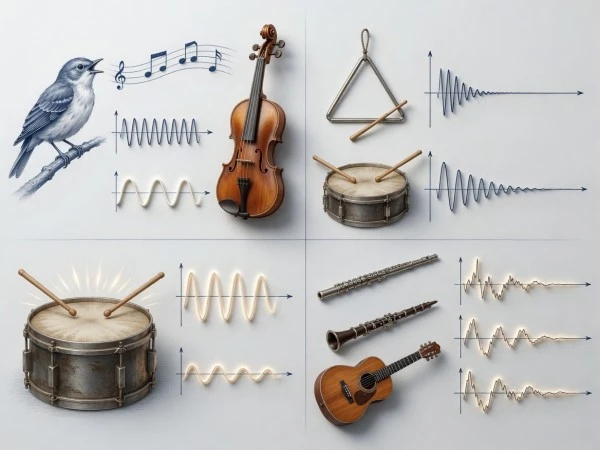
Sound as Raw Material
The Qualities of Sound: Pitch, Duration, Intensity and Timbre
The Staff: Lines, Spaces and Clefs
The Treble Clef: The Guitar's Clef
Musical Notes: Names in the Latin and Anglo-Saxon Systems
Notes on the Guitar Fretboard
Rhythm Figures: Whole, Half, Quarter and Eighth Notes
Smaller Note Values: Sixteenth, Thirty-Second and Sixty-Fourth Notes
Rests: Silence Is Also Music
The Dot and the Tie: How to Modify Duration
Accidentals: Sharps, Flats, and Naturals
Accidentals on the Guitar Fretboard
How to Read Guitar Sheet Music Step by Step
Guitar Tab (TAB): what it is, advantages and limitations
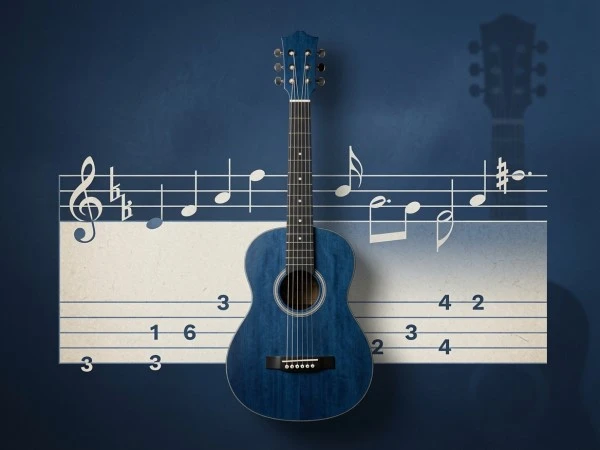
Sheet music and TAB combined: how to use them together
The pulse: the invisible foundation of all music
Tempo: the speed of the pulse and how to measure it
The metronome: why use it and how to practice with it
The bar: how musical time is organized
The numerator and denominator of the time signature: what they mean
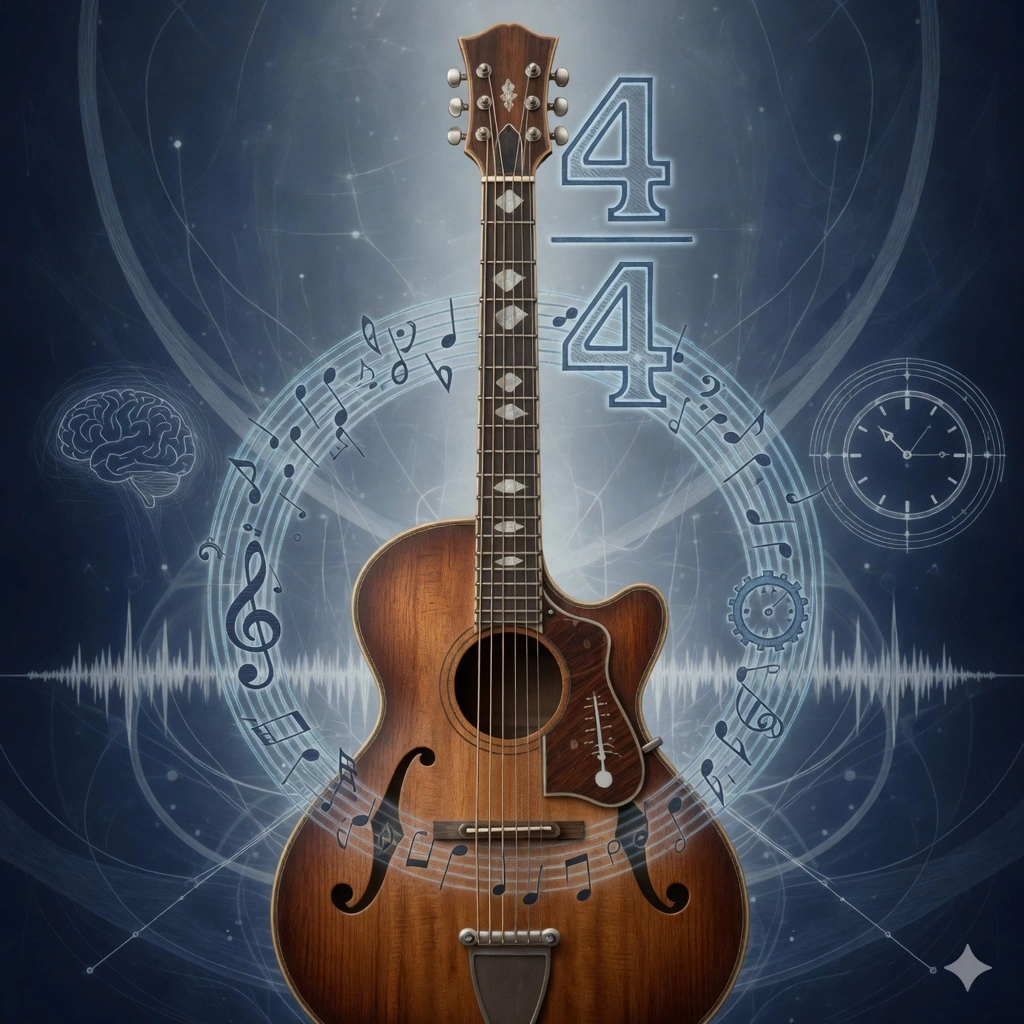
4/4 Time Signature: The Most Common in Guitar
3/4 Time Signature: The Waltz and Its Guitar Applications
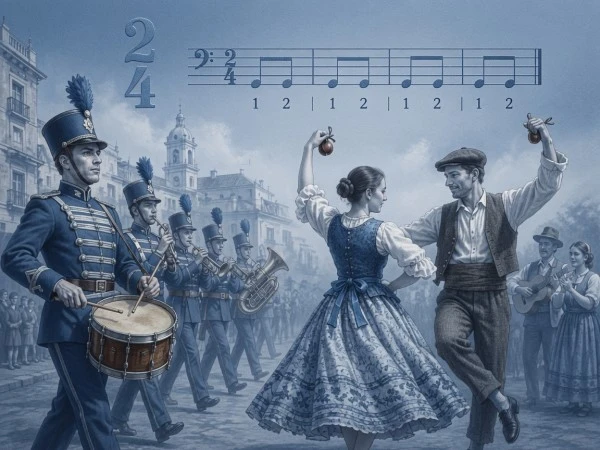
2/4 Time Signature: The March and Popular Music
Rhythmic Accent: Strong Beat and Weak Beat
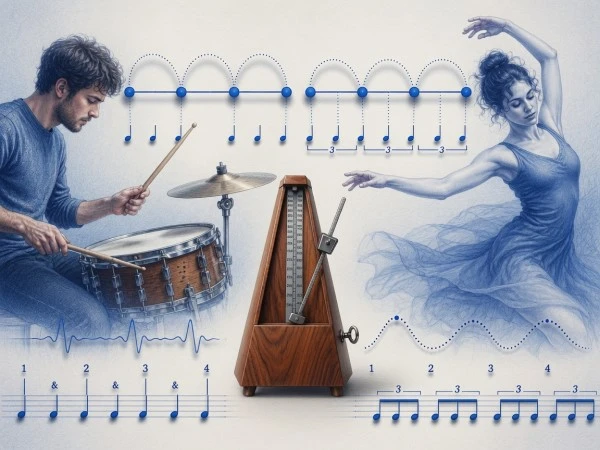
Binary and Ternary Subdivision: How to Count Time
The 12 Sounds of Western Music: The Chromatic Scale
Semitones and Tones: The Distance Between Two Notes
Standard Guitar Tuning: EADGBE
Alternative Tunings: Drop D, Drop C and Open Tunings
The Fret as a Semitone: How the Fretboard Works
What Is Harmony: When Two or More Notes Sound Together
Consonance and Dissonance: Why Some Intervals Sound Good or Bad
Unison and Octave: The Identity Between Notes